
Podcast
E126 Trusting God When Pain Remains and Losses Pile | David Heflin
Quick Links
From Today's Episode
How do we trust God when suffering and ongoing losses derail our plans and steamroll our dreams? After many medical evaluations for unexplained symptoms, David Heflin was diagnosed with two serious and painful autoimmune disorders. He recounts years of chronic pain, financial strain, and depression, as well as the heartache of discovering that two of his children also suffered from the same illnesses. David explains God’s compassionate heart and rejects the idea that unhealed suffering signals weak faith. We highlight the healing power of lament and celebrate God’s miraculous provisions through the founding of Broken and Mended, and how this growing chronic illness ministry provides biblical hope and resources in this country and in East Africa.
00:00 Hold On To God
02:38 Painful Symptoms Begin
05:13 Ankylosing Spondylitis Confirmed
07:25 Crohn’s And Mayo Clinic
08:52 Faith Shaken And Dreams Lost
11:15 Lament And A Miracle
13:29 Praying Through Chronic Loss
15:05 Flare Ups, Depression, And Weariness
19:21 Grieving Differently As A Couple
25:45 Challenging Prosperity Thinking
29:51 God Speaks In Pain
31:53 Provision Story And Presence
36:28 When Kids Get Sick
43:51 Broken And Mended Purposes
Today's Verses
Additional Resources
Podcast Transcription
Trusting God When Pain Remains and Losses Pile: David Heflin E126
David: [00:00:00] Nothing gets easier away from God. And if we can hold on to God, it may not make our situation easy, but we know that He’s with us and He can guide us through it. I also remember Peter’s words when Jesus asked, “Do you want to leave, too?” And he says, ” to whom would we go? You have the words of eternal life.”
Welcome to the Unshakable Hope podcast, where real life intersects redeeming love. I’m Kelly Hall, and this is where we wrestle through faith questions, such as how do I trust God’s heart when His ways and delays are breaking mine? We’ll hear from people just like you and me who have experienced God’s faithfulness when life didn’t unfold as they expected.
My prayer is that God would renew our hope in His Word and His love through these conversations.
Hey, friends. I can’t wait to share this episode with you. I was planning on waiting until after the first of the year, but I just couldn’t. The message David shares is [00:01:00] profound as well as vulnerable, and one I believe that will encourage all of us in our journeys of faith, regardless of our particular challenges.
My guest, David Heflin, had his dream steamrolled by diagnoses of two serious and painful autoimmune diseases. We’ll learn the different ways he and his wife grieved, and we’ll hear some of the beautiful, miraculous ways that God showed up in their story. Trusting God doesn’t mean the pain disappears, and it doesn’t mean we’re protected from even deeper heartache, but we do find great hope and comfort in the unfailing presence of our God who is with us through it all and brings purpose and redemption out of the hardest stories.
David Heflin experienced this in his own life when God called him to leave his pastoral ministry and start Broken and Mended, which is a support group ministry for those living with chronic illness and pain. He’s the author of Purpose and Pain: Rediscovering God’s Purpose Through the Pain of Chronic Illness.
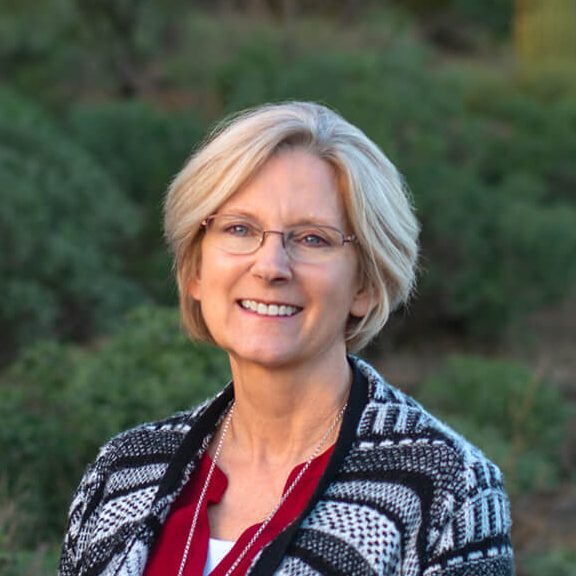
He’s [00:02:00] also a podcaster., A podcast that invites people to consider how God is in the seams of our brokenness, and how He mends us through our suffering. holds a bachelor’s in Bible and a master’s in theology. He lives in northwest Oklahoma with his wife, Katie, and their three children. David, thank you so much for joining Unshakable Hope to share your story and your encouragement.
David: I thank you so much for having me. I’m very glad to be here.
Kelly: Why don’t you start by just giving us an overview of your story, and start with where you were in life when you received your diagnoses. What was your faith like, your family situation, and your job?
David: Sure. I was living in New Mexico in 2011.
David: I was in a town called Portales, and I was a preacher, pastor at a church there. Had just started really in 2010, and so maybe, a bit over a year on the job, at that particular church. My kids were very young. I wanna say probably my oldest was maybe [00:03:00] first grade, and that would have made my, middle child about four, would have made Rebecca, my daughter, about one.
David: So , young kids. And I found out that in our town we had a taekwondo studio. And I had been involved in martial arts when I was a kid, and so I thought it would be really great to get involved with that again. Good for me in terms of fitness, but, I just wanted to be involved in something physical.
David: But I also wanted to include my boys. Even though they were very young, I got them involved, and I had done the same thing with my dad when I was growing up and my brother. And so it’s kind of coming full circle with some of that. But I wasn’t involved in it very long that when we were doing a particular type of kicking drill, I felt a sharp pain in my left hip followed two days later by almost the exact same pain in my right hip.
David: And at the time, I thought it was muscular, a lack of flexibility you know. And then I go thr- I go through the long process of trying to get to a diagnosis, and a, a lot of people go a lot [00:04:00] longer than I did, but there were still a lot of frustrations early on. I went through two doctors that were not very helpful at all.
David: In fact, in, in one case, I could say w- he was probably harmful. And also suggesting… And women get this a lot more than men, but this doctor suggested that maybe the pain was mental. It was just in my head.
Ugh.
David: And, so that was very frustrating. I eventually got referred to an orthopedic surgeon, who within five minutes being with me was very validating, listened, told me the other doctor was wrong.
David: This was, “You have something seriously wrong with your hips, and we’re gonna find out what it is.” And it turned out I had something called, hip impingement and what that means is that, your ball and your socket have, extra bone growth there, like bone spurs, so that when I was rotating on my hip…
David: So it wasn’t the kick leg. It was kind of that plant leg where you’re rotating to get power. .. Those bones were coming together, and they were tearing into the labrum in the hip. And my left side was almost torn completely in two, and then, and my right side was damaged as well. But believe it or not, at [00:05:00] the time I thought that was still good news.
David: I thought that I got a diagnosis. Yes, I know it’s gonna be surgery. It was gonna be arthroscopic surgery. And I thought, I’ll go through the rehab, and I’ll get back to everything I wanted to do. And my very first appointment with my surgeon, who was different than the, the first orthopedic surgeon I met with, I found out that there was much more going on.
David: He was looking at my X-rays, and I remember him saying, “Well, you know, something’s not right.” And he wasn’t just looking at my hips. He was looking at my spine, and he saw in my SI joints that they were starting to fuse. There was, bridging there with a narrowing of the joint space there, and he said, “That looks like ankylosing spondylitis.”
David: And the only reason I knew that term at all was because we had a, a guy in our church who, had that, and I knew that that’s what it was called. And that man had gone through more pain than anyone I’d ever seen, so it wasn’t a very welcome word, for sure.
Right.
David: And, uh, but I [00:06:00] didn’t understand it necessarily, and I was still kind of focused on getting my hips fixed.
David: And it wasn’t an, it wasn’t an official diagnosis ’cause he wasn’t a rheumatologist. So I kind of crossed my fingers, you know, and hoped that really wasn’t gonna turn out to be that way. I did have the hip surgery but ultimately the doctor was right. And because ankylosing spondylitis is a autoimmune inflammatory arthritic disease, uh, that attacks…
David: causes inflammation all over the body and attacks healthy joints and tissue. And so when you do something like go through a surgery, it can really ramp up, uh, the inflammation, and my back really began to hurt about that time, too. Became difficult for me to sit and to travel. And, uh, when I finally saw a rheumatologist, so we’re now in 2012, so this started in March of 2011, so August of 2012 you know, she came in the room.
David: She had looked at my x-rays, listened to me again for probably five minutes and said, “Yeah, you absolutely have ankylosing spondylitis.” And that was weird enough. But I think, too, it [00:07:00] was just hard for me to adjust to, the reality that she was putting me on this… it’s an incurable disease.
David: She was putting me on this very powerful immunosuppressant drug, uh, and those type of drugs I was… un- until some kind of medical breakthrough happens, I’m gonna be on those for the rest of my life. Unless God, you know, took it away, which of course in the beginning I did, pray for that, prayed for healing.
David: But eventually you start to kind of adjust to this, this new normal. Uh, but my new normal didn’t last for very long because in tw- 2013 I began to have a whole nother set of symptoms related to the GI system, digestive system. And I knew something was wrong pretty quickly because, the symptoms that we typically have with, a stomach virus, they go away.
David: At worst case, you’re probably thinking, what, three days or something like that, you know. , And mine were still with me two weeks later, and I, and I realized again that, okay, this isn’t good. And so I had to go get , a GI. And That led to another series of events that eventually landed [00:08:00] me at the Mayo Clinic in, uh, Rochester, Minnesota.
David: Uh, so by that time, we’re now in November of 2013. There’s a whole part of that story I, you know, and I wanna save time for other things we’re gonna talk about, but it could’ve been a lot worse is just what I, wanna s- wanna say. And it, and at one time it looked like it might be. That’s why I was sent to the Mayo Clinic because there was some concerns, particularly with my liver that I might, uh, have some, um, a much more serious, um, and dangerous disease.
David: It turned out I was diagnosed though with Crohn’s, and Crohn’s disease can be dangerous. But at this point was under treatment, and I was managing that okay, and so I left the Mayo Clinic with those two, uh, diagnoses. And again, just kinda had to learn to adjust to a new normal. And that’s kind of, I mean, that’s kind of where I am up to the point of getting the, you know, the diagnoses.
David: You know, my relationship with God, I mean, I, I would consider that it was strong. I had been through other things before in my life, and it’s the reason why I [00:09:00] wanted to go into ministry is because I felt called by God to-
Yeah …
David: you know, come into ministry. But what I would say about that time is not necessarily that I was thinking, you know, “Why is this happening to me?”
David: And it’s okay if people feel that way, but for me it was just always, if it happens to other people it can happen to me. I, I didn’t think I was some kind of exception to that. But it was disorienting and confusing. It was, I thought my life was gonna look this way, and now all of that is kind of being taken away, um, because I had envisioned maybe getting my black belt, starting up my own school, and maybe using those contacts to plant a church in a city and, and I had all these ideas and things I wanted to pursue.
David: And not to mention just going through this with my boys and, a- and all that. All that was gone, and so I was trying to figure out, okay, you know, what’s next? And, uh, so it was a disorienting time, particularly ’cause when you keep going to the doctor and you get a little bit… E- every time it seems to get a little bit worse than what you were thinking, and you wonder when are you gonna reach kind of the bottom of the rabbit hole.
David: Right. And, and [00:10:00] so I remember all those appointments. My wife was able to go with me to a lot of those, and we just would just walk into the doctor’s office hoping for some good news, and we would leave time and time again just more and more confused and – devastated in a lot of ways.
David: And so I wanna say I, I didn’t blame God, but that doesn’t mean that my faith didn’t need to be deepened, and I think through the process of going through this, eventually it would be.
Absolutely. Were there any other diagnoses that you received along the way, or was it these two main ones?
David: Well, there are some other things I had something called eosinophilic, esophagitis, and that seemed to go into remission, though, when I was treating the, Crohn’s.
David: And I had another disease, at least the first doctor thought I had something called eosinophilic colitis which is a more rare disease and why he was more concerned and sent me to the Mayo Clinic. So the weird thing about that, that part of the story is that it was true that I had eosinophils in my colon.
David: Eosinophils are white blood cells. Everybody has them, but they’re important for the [00:11:00] immune system, but they’re not supposed to be in in certain places. The concern was if I had them in my colon and my liver, I had stage two fibrosis of the liver. We didn’t really know why, so the concern was is there eosinophils there?
David: And so that could be, a dangerous and even fatal disease. When we went to the Mayo Clinic, it, that was the most disorienting time, and I remember driving around in the car and with my wife, and this song comes on that I still listen to a lot, especially on, in really tough times.
David: It’s called Warn, W-O-R-N, by Tenth Avenue North, and it’s basically a song of lament and crying out to God. And and that song was really helpful to us, and, , it was emotional for us to listen to it together, and I remember that being a particularly emotional moment but all of that and I give praise to God for this, either was healed or was misread by the first doctor. Because they re- confirmed his diagnoses because they studied the same- biopsies. Yeah. But when they repeated them, it was no longer the case. And so I’ve always considered that a, a moment of healing, even though [00:12:00] God didn’t take away, the two main things , that remained.
David: I have some other stuff but those are really the two autoimmune diseases that affect me the most.
Kelly: Well, I’ve got to say that I believe that was a miracle first of all. Thank you, Lord, for that healing. Yeah. But that song, Warn, by Tenth Avenue North, that carried me through years.
Kelly: Mm. And it is the most honest song I had ever heard in my life. I used to play it, years ago at women’s retreats- Really? … just to help people tell the truth about the pain that they were experiencing. I absolutely loved it, and some Christian radio stations wouldn’t play it because they said it wasn’t hopeful enough.
Kelly: And- Oh,
David: wow. …
Kelly: I thought it was so hopeful because it’s filled with truth, and we can tell God whatever we want, and He’s got us. I love, I read that in your book, and I was like, “Yes!” Oh, I just- Yeah … love that song so much.
David: Yeah, I still love it. And the music video- Me too … if people haven’t seen it, the official music video, I’m sure you can [00:13:00] find it on YouTube, is, is- Yeah
David: very powerful the way they depict it as well.
Kelly: Absolutely.
David: Um so yeah. I know that’s kind of a different topic, but it’s a little bit sad to me that, the thought is we can’t truly lament in a lot of churches, or even on Christian radio stations, and that it’s gotta- Yeah … always be positive and and yet I would say, just like you said, there is hope in that song.
David: Yeah. Because in crying out to God, he’s the one that can actually intervene and come into our lives and help us in, in those, those moments, and that is hopeful to me.
Kelly: So. Absolutely. Absolutely. I think it’s filled with hope. One of the things you write about, I mean, you, you live with chronic pain, and you live with this chronic illness, but you write, ” It isn’t just the pain and I, you know, there’s so many questions in our hearts when we’re blindsided by loss.
Kelly: We lose identity, we lose purpose, we lose our view of God in some ways because Usually it’s because we had a diminished view of God, and not an accurate- Yeah … view of God. And so we have to deconstruct what was wrong about our faith and, and build up the [00:14:00] truth of who God is in that place.
Kelly: So it’s very disorienting. You really have to sort through and wrestle through a lot of these questions.
David: Sure.
Kelly: Every time we experience a loss or disappointment of any kind, they must be grieved. So how did you pray through these losses, and did you struggle with, it sounds like you didn’t, but anger, bitterness, being offended as the days got long and nothing was better?
David: Yeah. Well, it may be true I don’t know that I became bitter or angry at God. But I do wanna just say for anyone listening, if you have those emotions toward God, that God can handle that, and there are plenty of people in scripture that get kind of angry at ti… I mean, I think Job is especially the most prominent example.
David: I mean, if you read what Job says he’s angry. And it is directed at God, and the reason why it’s directed at God is ’cause Job knows that He’s the one who’s ultimately sovereign and responsible f, in, in his way of thinking, right, for everything that’s happened to him. And so, I think God already knows how we feel, so there’s no, no [00:15:00] sense trying to hide it.
David: So I wouldn’t say that anger was my biggest issue. I, I would say though that as things went on, so I, I started a new flare in 2015 on the arthritic side of my disease that ended up lasting for years, and so it was horrible. I, I couldn’t sit 15 minutes without being in a great deal of pain. As you would might imagine, a minister who’s writing sermons, who’s visiting with people, who takes car trips to see people and do other things a majority of your time is in a sitting position.
David: And for me, that became so incredibly difficult. I would try to stand and write. There’s even a time or two I tried to write on my knees because I took– it hurt to stand too long. It obviously hurt to sit down. And so all I would do, you know, is I would think about when can I get home, lie on my couch and be kind of sideways.
David: ‘Cause if I could lay sideways, I felt better. But you can’t really write, you know, laying sideways and- Yeah … or [00:16:00] I guess you could read that way, but it was just a tremendously difficult time for me. And what I think started to take hold there, while it may have some relationship to bitterness, I would actually describe it as depression.
David: And at the time, I don’t know if I recognized it as that right away, but looking back on it and knowing a lot more about depression now than I did then it, kind of made sense, right? Everything I did in life was painful, and even the things that are supposed to be pleasant and pleasurable were extremely difficult.
David: I mean, I used to love to travel go places One of the worst 15 hours, I’d say, of my life, , was on a plane flight to Shanghai. I was going on a mission trip, and it was right in the middle of that flare. Probably shouldn’t have gone, but of course I just didn’t realize how bad it was going to be.
David: And it was awful. And, , tried to go through various different ways of making it better, you know, like,, getting my nerves burned in my back through radio ablation and that was ineffective for me. It is effective for some, but for me it wasn’t effective. [00:17:00] And so, there was just this mental, emotional toll that was happening.
David: And rather than anger, I think I felt, began to feel emotionally numb and distant.
Yeah.
David: And that distance can certainly apply to, , my walk with God. Not that He had gone anywhere, but just that I felt just this kind of numbness, you know, toward God, and toward life in general sometimes and even, , toward my family.
David: And that’s a hard place to be in because it’s difficult to explain to those that you love what you’re going through. You don’t wanna make excuses, but at the same time you’re trying to be really honest, but then it’s also difficult just to even express exactly what you’re feeling and especially when it’s all new.
David: And so that was a very difficult, time. This is about five year… Well, so 2011. Yeah, so 2015, ’16, f- four and five years later from when it began is really where things kinda, you know, bottomed out. And along with that there was this financial struggle from the very beginning that this all cost too, and so you got these financial pressures all the time bearing [00:18:00] down on you.
David: At the same time, this kinda diminishing, world of, you know, – in terms of being able to enjoy the world around you. And then the mental health issues start to come into play as well, and so everything becomes, a struggle. And you try to cry out to God and then sometimes you just don’t feel like it, and so you’re just, again, just kinda numb and withdrawn.
David: And so, I don’t know that I remember your original question there, but-
No …
David: anyway, that-
It’s okay. You- Yeah … what you’re describing is weariness too. Paul Miller in his book A Praying Life,
He talks about the defeated weariness that can settle into Christians’ lives where we’re not- Hmm
we’re not bitter, but we’re just so weary of the ongoing struggles that we have a diminished view of God. And so when we numb, it just happens so naturally that we start losing our expectations of goodness, of seeing God’s- Hmm … goodness in our lives.
And that is a place where I had been before, and God had to just, heal my heart from that- Sure … place. It’s just so hard. Well, in your book, you talk about [00:19:00] the losses we’ve exper- we can experience through chronic illness, and really, I think it applies to every single loss in life. We have the loss of dreams, of financial control, which you’ve talked about, the loss of time, the loss of relationships.
I know so many people walking through chronic illness have experienced that. The loss of- Yeah … dignity, the loss of mental health. And as you and your wife grieved all these different losses and that impacted your family in major ways, can you talk … You said you and your wife grieved differently. Would you mind explaining how that process was different?
Because I think it can help us understand what grief can look like in different people’s lives.
David: Yeah, I think the first time I recognized that we really approach things very differently that were difficult was before the Ma- going to the Mayo Clinic. Because my mind I I want to know all the possibilities.
David: I, I want to be able to talk about it even if it’s bad. And my wife’s a- attitude [00:20:00] was, “Okay, but we don’t know any of that yet, and I don’t wanna deal with that until we have to.” And so it was very much a deal with it in the moment kind of thing, and, uh, which I mean, has some wisdom to it.
David: But I think just because of the way my mind works, and it’s very analytical, and I just think out loud a lot anyway, and sometimes I wanna talk about those thoughts, and I realized that we had a very different approach and she realized it too. And so we could kinda meet each other kinda in the middle there, where I didn’t, overdo the speculation and, you know, needing to talk about things that had not occurred yet and may not occur.
David: But at the same time, she knew that at times I did need to be able to talk, uh, a- about this. And so what I didn’t realize, though, is just the cumulative effect that this was having on, on Katie. Of course, I knew that she shared all these burdens with me. I knew that she hurt for me when I hurt.
David: She experienced the same financial, wreck that I did. She experienced the emotional [00:21:00] distance that sometimes would come in because of my struggles, and et cetera. All those things. So it wasn’t like I wasn’t aware she was experiencing those, but it looked like she was always kinda processing those emotionally very well and I know we hadn’t talked about the start of Broken & Mended, but I started Broken & Mended in 2018.
David: And then end of 2024, and then actually the transition took place in 2025, began to work full time for Broken & Mended. And when I did that, it freed us up ’cause I was no longer having to preach every Sunday and that sort of thing. Freed us up to go to other churches and start sharing our story with people.
David: When Katie started, and the first time I realized it, we were going to our very first seminar that we were gonna do, in Sherman, Texas, and we were in the car for a long drive, so we were kind of rehearsing, our parts of the seminar. And she started to rehearse hers and she couldn’t.
David: She just became overwhelmed with emotion and began, just began crying. That repeated itself in the real-life situation, when she tried to share it, there, and it pretty much has every time she’s spoken about it since. And I think [00:22:00] I didn’t realize, she didn’t realize how much of this she had really bottled up inside of her.
David: And so it was kinda shocking for me to see just how deep her grief really was. And so that was interesting ’cause I’m always kind of proc- in my case, I do process a lot of things all the time. I also went to counseling.
David: I went and saw and spoke with a therapist on kind of three different times in my life over several different sessions to help me deal with these things. She had never done anything like that. And from the out or outward appearance was, “Oh, she’s just doing fine. She doesn’t really need it.
David: She’s more emotionally mature than all of us,” you know? And we were underestimating the amount of grief, and she was underestimating the amount of grief that she was experiencing. And it finally came to where we’re sharing, she’s sharing her part of the story. Maybe that was the difference. I was always sharing my story with, in the different ministry contexts I was in.
David: And when she finally started to, it just was floodgates.
Kelly: Yeah. Yeah, that makes so much sense. I can remember once, it was the hardest time of my life to [00:23:00] point, to that point where my husband wasn’t able to live with us because of the Air Force. I had moved to St. Louis so our girls with special needs could go to school there and get surgeries for cochlear implants.
Kelly: And so I had these four little kids, very little kids. None of them could understand each other. I had no support system. I’m taking care of them all. And I grabbed a book, and I was just reading a list of someone else’s losses, and her story was nothing like mine. But as I read, I started sobbing from a place- Mm-hmm
Kelly: so deep inside of me, it didn’t even have words. And I just- Right … cried and cried, and then at some point it stopped, and I asked the Lord, “What was that about?” And He said, “You just needed to grieve the, the life that you thought you’d have at this point.” And so it can- Wow … it can so quickly arise. But our Lord is so faithful to minister to us, to heal us, to walk us through this grief journey when we let Him.
Kelly: And it would’ve been so easy when God was doing that [00:24:00] inside of me to push Him away and say, “This is too weird. Like, I don’t know what’s happening. I don’t want to cry.” But I just knew, I just felt His safety and His love, and I just- Mm … surrendered to it, and it was so healing. There was like a weight lifted off afterwards.
Kelly: And I’m just so- Mm … grateful for the way He meets us in our particular ways of dealing with it. And you know, I can relate to your wife as well because as I told my story, I would cry a lot more in the beginning, but telling it helped me process the emotions. Yeah. When you have somebody meet you in that space and they look in your eyes and they hear you and see you, you feel heard and seen by God, and it’s very healing.
David: Yeah, absolutely. I’m seeing that play out in her. Over time as she’s just continued to share and be a part of this with me, I think s- she is doing better emotionally. She has processed a lot of the grief that she didn’t even realize she needed to.
David: And so I’m very thankful for that. It’s not easy. A lot of times we’d rather, we don’t want to get [00:25:00] emotional- Right … about things. We want, we wanna be in control. And it’s hard to surrender to that moment, kind of like you did when you were talking about in reading that book. But I think it… you’re very correct.
David: God is a safe place for us to surrender all that emotion and that grief to him and to, to let it out. And so, yeah, I appreciate that.
Before– I’m gonna ask you another question, but before I get to that next question, I just wanna read something you wrote. “Our purpose in this grief is not self-pity, but it’s honest reflection and faithful lament.
And God brings us so much healing in that process.” I just wanted to read what you had said to wrap up that portion. We’re not full of self-pity. We’re just following the Lord in this faithful lament. So true, so beautiful.
David: Yeah. Thank
Kelly: you. Well, one of the wrong and harmful ideas that we often hear in Christian circles is that God’s only purpose in illness is to bring healing.
Kelly: That’s all he wants to do. He just wants to heal you, and if you’re not getting healing, well, that’s on you, and it brings a lot of [00:26:00] shame, and it is not God’s perspective. So can you speak to that and correct that idea for us with God’s viewpoint, God’s Word, God’s purpose?
David: Yeah. I, so w- what we’re talking about there, of course, is, the prosperity gospel, or at least thinking that’s influenced by the prosperity gospel.
David: Sometimes people call it the health and wealth gospel, but it’s this assumption that God… god is good, and that’s true, but that doesn’t mean that everything in our life is gonna be good if t- if we just believe more or we just pray more. And that’s the kind of the idea that people are told. And so what happens a lot of times, especially with people who, you know, have a chronic illness, they’re in a church environment like that, and, people prayed over them, “Hey, God’s gonna heal you,” and, and they tell them all this.
David: And then when it doesn’t happen, well, the people that have been talking to him in, in this situation or praying over them, they don’t know what to do with that. They don’t wanna blame God, and so they end up blaming the person. Maybe you don’t have enough [00:27:00] faith. Maybe you don’t you’re not praying enough, or you didn’t pray the right way.
David: There are other versions that aren’t as spiritual, but just well, if you just, follow this special diet that my Aunt Ruth followed, and, you’ll be healed of all your problems and, and on and on like that. It does bring shame, and it’s always putting it back on the person who’s already suffering.
David: And we know by watching Jesus’ ministry that he never did that. He never put shame on the people that were hurting the most. He, he gravitated toward those people, and he gave them their dignity. And yes, he did physically heal a lot of them. But nobody… and nowhere in the scriptures does it teach, and in, in our experience, no one is healed every time they get sick.
David: If that were the case, we would never die. I mean, we’re all inflicted, with mortality, right? I mean, it’s part of the curse that certainly Jesus has reversed and given us victory over, but victory over through the resurrection. We still face death until he comes, and of course, we all know this by experience.
David: But it’s like sometimes [00:28:00] we feel like like you said, if God isn’t healing us every time that we’re sick that something has gone wrong. And it’s very shortsighted ’cause it doesn’t envision a purpose or that God might be doing something even better in your life is possible by calling you to live faithfully with whatever affliction that you have.
David: And I get … If there’s one thing I get a little passionate about in the book, I think in terms of, calling out, it is that mentality, , the prosperity gospel mentality because I’ve seen so many people be hurt by it.
Kelly: Yeah.
David: It’s not a straw man when I’m talking about people literally being told they didn’t have enough faith or they didn’t pray well enough.
David: It happens all the time. Uh, we have all kinds of people , in Broken and Mended who have church hurt in their lives because they were told this by their churches. They were told this by family and close, loved ones that were, are Christians, and friends, and they have borne that shame.
David: It’s hurt them in a very significant way. And so I feel like Broken and Mended kind of becomes a place maybe where some of those people can [00:29:00] experience some healing in that sense, not … ’cause we can’t promise them physical healing. And I want to be clear that God can heal anytime He wants.
Absolutely. Yeah.
David: Yeah. And so we’re not limiting Him, but- Right … at some point you may come to the conclusion that God has said, “My grace is sufficient for you,” just like He told Paul after three times he pled for Him to remove his thorn in the flesh. And if that’s the case, then God is wanting to do something in our life through whatever grief or pain that we’re walking through, and none of us can avoid grief and pain throughout our whole life, whether you have chronic illness or not.
David: And so we want God to meet us there, and God does meet us there. Yeah. Uh, and acting like He can only be over here where He wants to heal you and He doesn’t know what to do with you if you’re not getting healed, that, that’s just wrong and, and it’s a perversion of the gospel.
Yes. Oh, my goodness.
That is so beautiful. I feel like the thing that has rescued my weary heart from turning away from God more than anything else is the fact that God is a God who speaks. God meets us [00:30:00] in our places of pain, and He moves and loves on us in those places. 2 Corinthians 4:17, “For our light and momentary troubles are achieving for us an eternal glory that far outweighs them all.”
So when we fix our eyes on Jesus- Mm … what is unseen, we get to experience His unseen love that is so tangible. It is so- Yes … amazing the way He ministers to us in those places, and we fall more in love with Jesus, and we are transformed into somebody who knows Jesus more than we did before, and that love spills out of us as in life.
David: Right. Yeah. Amen.
Kelly: I’m just so grateful for the ministry, the way you address that in people’s lives. I’ve seen so many people hurt in that regard. So I’d love it if you would just share a little bit of how you and your family have experienced God’s love, the personal ways that he has loved on y’all through this journey
David: Yeah, it’s like you said, His love is [00:31:00] very tangible and it presents itself in so many different ways.
David: I think that one of the big thing is, for us has been people that love us, who love Christ and who also love us. Yeah. , I know that a lot of people have lost relationships when they got chronic illness, or people who turn their back on them, and I hate that for them.
David: That has not happened to me. And so I recognize that, and I’m, and I’m very grateful for it. But it is a tangible way that God wants to show His love, is that His people, surround you with love, and they accept you, and they pray for you., And of course we’re trying to do that for others in Broken and Mended too- Yeah
David: who maybe didn’t receive that from their church or from their relatives or friends. And to let them know that they are loved and accepted by God in Christ. I think too, for me I always find that God is showing up in, just ways that kind of, they just kind of blow my mind. I’ll give you example.
David: When I made the decision, Katie and I made the decision that I was gonna be moving full time into Broken and Mended, [00:32:00] we told our church, I think, maybe something like September or t- 2024. The transition wasn’t gonna take place until March 1st of 2025. So that meant that we had that amount of time to raise some money, because we had only $2,000 in the bank account.
David: Broken and Mended’s bank account, and as you know, that’s not going to, provide a salary for anyone. Yeah. , And I was sending out all these different letters to packages, trying to make them look nice and impressive to all these different churches, and most of the time I couldn’t even get people to call me back or to respond to an email or anything.
David: And I was getting discouraged and maybe even starting to doubt, did I step out here too quickly? And all of a sudden, this person contacts me from another nonprofit that dealt with chronic illness. They were gonna be closing their doors. They felt like they had done what God wanted them to do for 10 years, and they were gonna be moving on.
David: And one of the things you do when you’re a nonprofit, if you close, is you’ve got to… You don’t get to keep the money, right? You’ve got [00:33:00] to invest that back into other nonprofits and that sort of thing. And so she told me that they were planning to divide it between three or four nonprofits. So she asked me a bunch of questions, about us and what we were doing, and I really didn’t think a lot of it.
David: I thought we might get a couple thousand dollars. I didn’t hear from her for six weeks, so I kind of thought maybe that they had just decided to go with some other people. And then about the time I was really just kind of giving up on that idea, she contacts me and told, and tells me that- Their board had voted to give all of their money to Broken Amended.
Kelly: Wow.
David: And it was over 17, thousand dollars.
David: And for us, with the little meager bank account at the time, what amazed me about that was that I did not, I didn’t send out a letter for that. Right. I didn’t know anything about it. And to be clear, if she doesn’t send the money and we don’t get that, God still loves us, right?
David: I’m not saying that, I’m not saying that God’s love is contingent upon, uh, something always working out in our favor, because if that were true, that would just fall back into [00:34:00] a prosperity gospel mentality. What I’m saying, though, is that He has shown His provision to us in many different ways to kind of affirm that we are walking in the direction that He wants, wants us to.
David: And I think that’s what, that’s how I experience God’s love the most is that He is with us. Uh, and I know that we know that’s the right answer. If it was a Bible quiz, “Is God with you?” We’re all gonna say yes. But sometimes we don’t live like we really believe that.
Kelly: Right.
David: And one thing that God has taught me over these years is to live as if He’s really with me.
Kelly: Mm.
David: And when you live that way, and you’re looking for how God is, is present in your life, it’s just amazing how many different ways that that shows up, and that’s just part of the privilege of being a child of God. That’s not anything special to be me or to be any particular person. Right. That is being a child of God, that God is truly with us.
David: Uh, and He shows up in our life in big ways, not because- He owes it to us, but because He is a God of love and grace and wants to [00:35:00] bless us with His presence, and it’s one of the main themes of the entire Bible. And Jesus himself- Right … of course saying that, “I will be with you to the end of the age.”
David: Give… The pouring out of the Holy Spirit into His people, of the very presence of God living in us individually as well as through His, through the church, and the great promise at the end of all things that we will be with God and, uh, we will be His people, He will be our God, and we will be with Him forever.
David: And so that theme is scriptural, but it also plays out very much in our lives if we’re looking for it to.
Kelly: Absolutely. And just going back to that scripture in 2 Corinthians 4:16-18 where it says, “We look at the things that are not seen instead of looking at what’s seen.” Just this morning I was praying that God would open my eyes to see what is unseen, to see how He’s working behind the scenes to- Mm-hmm
Kelly: to encourage us, to love on us, to bring us into those places where He wants us to be, to transform us into people who are really believing the truth, that He is at work in mighty ways. Amen. Yeah. The [00:36:00] same power that raised Christ from the dead. Lord, I wanna see it and I wanna believe it, even in these places that seem like You’re not there.
Kelly: Mm-hmm. So I just so appreciate you sharing that.
David: Sure. Absolutely.
Okay. That just choked me up a little.
David: Well, that’s the kinda thing that ought to choke us up every once in a while ’cause it’s really amazing, just God’s love and presence in our life. It’s just in- it’s incredible. It’s, it’s something certainly worth some, some tears and deep feeling for.
Yeah. Yeah. Absolutely. Well, before I have you tell us more about Broken and Mended, I’d love for you to speak to some later losses. There were some additional piles of losses that could have shipwrecked your faith, your family’s faith, your children’s faith. Can you talk to us about what you went through as a family, and then how y’all hung onto God and refused to give up on Him?
David: Yeah, sure. Um, you know, when you’re going through something personally and pain, it demands your attention so much, uh, it certainly is a big deal. [00:37:00] But as an adult I think sometimes it’s… I can at least cope with it, uh, in a way that I’ve have some control over my… I’m having a hard time expressing it.
David: It’s just different if it happens to your kid, right? If it happens to your-
Kelly: It is so different. Yes. Yes, David. When it is your kids, it stirs something deeper and more painful than anything you’d ever experienced.
David: Yes. And, and I think it’s because we feel so helpless when this is- Yeah … this is happening.
David: And, so my middle, my oldest son is, is fine and healthy, which is ironic, uh, in a way, just ’cause he was the one that had the most trouble when he was first born, but he’s great, healthy. But my middle child, when he was 16, or 15 actually, so before his 16th birthday he began to experience really mysterious symptoms.
David: We were not looking for it to be what I had because it didn’t present in the s- it didn’t present in the same way. Was, he started to get very f- fatigued, started to have fever every day. He got to the point where, you know, he was missing a ton of school, and this go- this went on for months.
David: So [00:38:00] we’re, we’re no longer thinking virus, he just needs more antibiotic or anything like that. We’re like, “What in the world is, is causing this to happen?” And the early test results don’t really reveal anything. And, you know, he’s also a person who is in marching band and plays the drums. Uh, eventually he has to give that up, because he can’t hold the drumsticks.
David: His hands start to hurt and he can’t bear the, the weight of the drum. He was a, played the bass drum, which is the, the bigger one, you know? And, and just the marching and all that, he just f- from a fatigue standpoint, but then his back began to hurt. And so when some of these other symptoms started, of course we did start to think about, okay, maybe he does have this autoimmune disease that I have.
David: And we began to get him into the same rheumatologist I was seeing, uh, to try and get some answers so we could try to, find, you know, get him, get him on some kinda treatment that could help him, uh, to get better. Uh, but in the time when that’s still taking place and before we really found an effective treatment, he had to quit band, he had to quit his job.
David: , He missed all kinds of [00:39:00] work. Well, he quit his job. I meant to say he missed all kinds of school. Probably what I remember the most, just from an emotional standpoint, was- he was always the most lively, fun one in, in the family. Entertaining, and he would come in to have dinner.
David: He would lay his head on the table, and he would just s- lay there for a moment and ask if finally if he could be excused with hardly eating a bite. And it was heartbreaking, to see Micah go through that.
David: Eventually he did get diagnosed with ankylosing spondylitis. We did find treatments that allowed him to get back much of his life, and he’s in college today.
David: He’s a junior in college. And he is, he’s living a relatively normal life. He does have s- he does still deal with pain. He actually also deals with psoriasis. And so he may have ankylosing spondylitis and/or sor- psoriatic arthritis both kind of run in my family. And and so we’ve, we’ve eventually accepted that and kind of moved on with it.
David: But then last summer, my daughter, so summer of [00:40:00] ’25 began to have significant symptoms of GI related symptoms. But again, it presented a little bit differently than mine s- and we thought some other things might be going on. So i- in hindsight, we should have said, “Well, this looks like Crohn’s.
David: Let’s get straight to a, a GI and, and get this diagnosed.” But we, we just didn’t quite put it together as quickly as we would have liked to have. And and so things got really bad for her. And before we got her treated, uh, she had to quit her job. She had to a- she didn’t just miss school. She had to quit going to school altogether.
David: She could not go to her youth group. And what was really hard was watching her get skinnier and skinnier and seeing her lab work come back, and she was malnourished, because she wasn’t able to absorb the nutrients. And this was heartbreaking. And th- this for me and for Katie was the time I think emotionally was the hardest of this whole thing for us.
David: And because I think in some ways we kind of buy into the idea that we’d done our fair share with this.
Kelly: Yeah.
David: Been through it with the son. We’ve b- I’ve been through [00:41:00] it. We don’t need any more of it. It’s just felt, it just felt in the moment incredibly unfair. And, and it’s just was, it’s just heartbreaking for a dad to see her daughter go through something like that,
Kelly: mm-hmm.
David: And we eventually got her into a great doctor. She’s doing much better today. She’s back to her job, goes to youth groups, going back to school. She’s not perfect. She’s fatigued more than others, and, you know, she still, has Crohn’s flares and that sort of thing, but she’s doing better.
David: We’re very thankful for that. As I look back on how we held on to God there, I think it was, especially in Rebecca’s case, because we’d been through it already with Ma- Makia, the grief was much more in the moment,
mm-hmm.
David: And so what… A certain song we would sing at church, we would both tear up, and Katie especially.
David: Again, just with those emotions still, still kind of dealing with all that, you know, had come up in the recent years. Well, not even the recent years. R- just, like, recent year that she started really processing the grief of what we’d been through with me and Makia, and now with Rebecca, our daughter. And I think, though, at the time, it [00:42:00] just felt like I, I can’t believe we’re having to go through with this, but, uh, go through this again.
David: But I also remember Peter’s words when Jesus asked, “Do you want to leave, too?” And he says, “To where would we go? To whom would we go? You have the words of eternal life.” Nothing gets easier away from God. And if we can hold on to God, it may not make our situation easy, but we know that He’s with us and He can guide us through it.
David: And we just grieved, I think, a lot more openly this time around, and I think now we’re all in a, a little bit better place. But that’s also in part ’cause she’s doing better. Had she not gotten better I don’t know where we would be. We were never gonna give up our faith in God, of course, but I mean, I don’t know where we would be emotionally with this.
David: So we’re, we’re grateful where she is, but she’s still gonna have to go to doctors all her life. She’s gonna have to be on this medicine all her life and, she did unfortunately have some, damage to her intestines before you know, the treatment started and I think hopefully we caught that in time.
David: But anyway, I, I’m rambling a little bit about all that, but it’s just a, it’s just a hard thing to go [00:43:00] through. And any, any, any parents, uh, that have gone through that will immediately relate to what I’m talking to, talking about.
Kelly: Yeah. Absolutely.
David: Yeah.
Kelly: Yeah, that’s so, it’s so poignant as you describe it. One of the things you said that I for sure walk through, and I think everybody does, is we have suffered our pile, and so we should be done by now.
Kelly: Yeah. And when you read Job, you see, and I, I wrote this in my Bible study, past suffering does not preclude us from future suffering. That’s for sure. And we need to just be open-handed before the Lord with that- Yeah … and remain tender before him. So I, I appreciate you so much sharing that story, and I’m so thankful that things have evened out and you’re all adjusting to the new normal that right now- Yeah
Kelly: there are no more everybody’s in crisis kind of moments. It’s settled, settled down. So talk to us about the ministry that Broken and Mended offers. When I go to that website, I’m amazed by all that you have going on.
David: Yeah. Well, [00:44:00] I started Broken and Mended out of a, what I felt like was a, a conviction or a call from God, you know, when I began to recognize that these resources did not exist.
David: There were no Christian-based support groups that I could find at that time. There were no resources if you wanted to start one. I had people coming up to me from my church telling me when I talked about it from the pulpit that they had never really even heard it acknowledged in the way that I did from the pulpit, and it really convicted me that I needed to be at least a part of the solution of, of that.
David: And so we moved to Oklahoma in 2017, so it was in 2018 that Broken and Mended actually got its start, and it started just as a local church support group. Again, we had n- no materials to do it, so what we had to do was, or what I had to do it was write these sessions for the group every time we had a meeting.
David: Just like if you were preparing a brand-new Bible class or something. And so would do that, and people would share their story, and there would be discussion questions, but there was always a devotional that was k- based on something [00:45:00] to do with chronic illness and chronic pain and what the Bible has to say to us about it or, or something like…
David: some connection between our faith and what we were going through. And it was really amazing to see how people were blessed and how much they felt heard, I think was kind of one of the mo- believed is one of the biggest things, that they could come to that room, they could talk about what they were going through, and everyone just got it.
David: They understood. Even if their thing was very different, they… we all had that common, experience of not getting better and, and dealing with the struggle of chronic pain and chronic illness. So from there, for the first couple years, that was all it was, just my local church support group, and eventually, though, we wrote enough of these sessions that began to create a book.
David: A leader’s guide that could be used in other locations, if churches wanted to start their own support group. Mm-hmm. And I wrote a participant’s guide as well, for the group members. And, about the time we’re ready to unveil this to the world, , we get hit with COVID.
David: [00:46:00] But we still had some incremental growth during that time, and we did have the first couple churches start to use Broken and Mended outside of our own. And we also just grew in our geographic reach through our virtual support group where we would have people from Hawaii all the way to Baltimore that were participating, you know, in that.
David: And so, because we couldn’t meet in person, and so we had this virtual thing going on, and later on we, we went back to in person. But we always had the virtual part as well, because there are always people who can’t physically go to a meeting like this.
Kelly: Right.
David: Mm-hmm. Um, be- and that’s why we’re doing the ministry.
David: The big thing that happened though was, it was a very slow start I would say here in the US that way. But there was a guy from Kenya who wanted to start a Broken and Mended group there. And so he contacted me and I said, “Okay, sure.” I sent him a box of materials literally, you know, shipped it over there.
David: And, finally gets them, starts his group, and then the next thing I know he’s having to make copies, uh, of the book so that… ’cause he’s got three [00:47:00] groups. And a little while after that he has six groups. And I told him that, “Okay, you can’t be a support group leader for that many groups.” I mean, it’s just-
David: not good for you. Yeah. Yeah, it’s crazy, right? Yeah. , He, we start, he starts to train other leaders there. And then one of those leaders mo- goes across the country, other side of Kenya, at a meeting where they have these ministers from all over East Africa, and he tells them about Broken and Mended.
David: And then things just explode. You know, and today, that all was 2022, I think. And so s- four years later four plus years later now, uh, we have hundreds of support groups throughout Kenya. Wow. Uh, we have support groups in Tanzania, South Sudan, Uganda, and Malawi. Uh, we just started a new support group in Zambia.
David: We have our materials in English and Swahili, and then we’re, we also have it in Spanish. We haven’t started any Spanish support groups yet, but that’s kind of our next frontier. And over time too, since I was able to move full-time to Broken and Mended,, we began to offer other things.
David: But we have the podcast. We have an annual [00:48:00] conference, which we just had in October. Had 235 people register for that. It was great. , It’s our second one, and God has just really used that to bless a lot of people. As I said, we’re also free to go and travel and do seminars at churches for their communities, for people who…
David: just have a weekend where we’re just acknowledging the people that are dealing with chronic illness and those that are affected by chronic illness, you know, to come together, and just really bless them, , over a weekend. And we’re adding new things all the time. So our next thing is, or our next big thing is that we’re going to be looking to start a ministry that helps families who have children with chronic illness.
Mm.
David: And so that is already kind of begun in a way. Probably will be more officially available sometime next year. And so God just keeps showing us places where we can minister, where there’s just not a lot going on otherwise. And so we’re trying to take advantage of those opportunities and, and be a blessing to whoever we can.
Kelly: That’s so exciting. I’m so thankful for the way the Lord is redeeming your suffering, the way, the ways [00:49:00] that God is pouring out comfort to other people as you carry them, living water in the fires of their sufferings. It’s really beautiful. Thank you.
David: Thank you.
Kelly: Thank you so much for being here today and for sharing your story. I will continue to pray for this ministry, and I’m gonna stay connected as well.
David: Well, thank you. S- thanks again for having me. I enjoyed the conversation.
If you were encouraged in your faith today, it’d be great if you’d help get the word out by subscribing, sharing with a friend, or leaving a review. I’d love to hear from you. You can reach out through my website, kellyhall.org, and pick up some free resources while you’re there. Thanks for listening to the Unshakable Hope podcast
Share this Episode

Welcome to the Blog!
Search the Blog
Categories
Archives
- January 2024
- December 2023
- April 2017
- March 2017
- January 2017
- December 2016
- July 2016
- May 2016
- April 2016
- March 2016
- February 2016
- January 2016
- December 2015
- November 2015
- October 2015
- September 2015
- August 2015
- July 2015
- June 2015
- May 2015
- April 2015
- March 2015
- February 2015
- January 2015
- December 2014
- November 2014
- October 2014
- September 2014
- August 2014
- July 2014